Organic Traffic Growth for Shopify Stores
A practical shopify organic traffic strategy covers technical SEO, buyer intent keywords, optimized product pages, and content that turns visitors into customers.
 Sikandar· · 7 min read
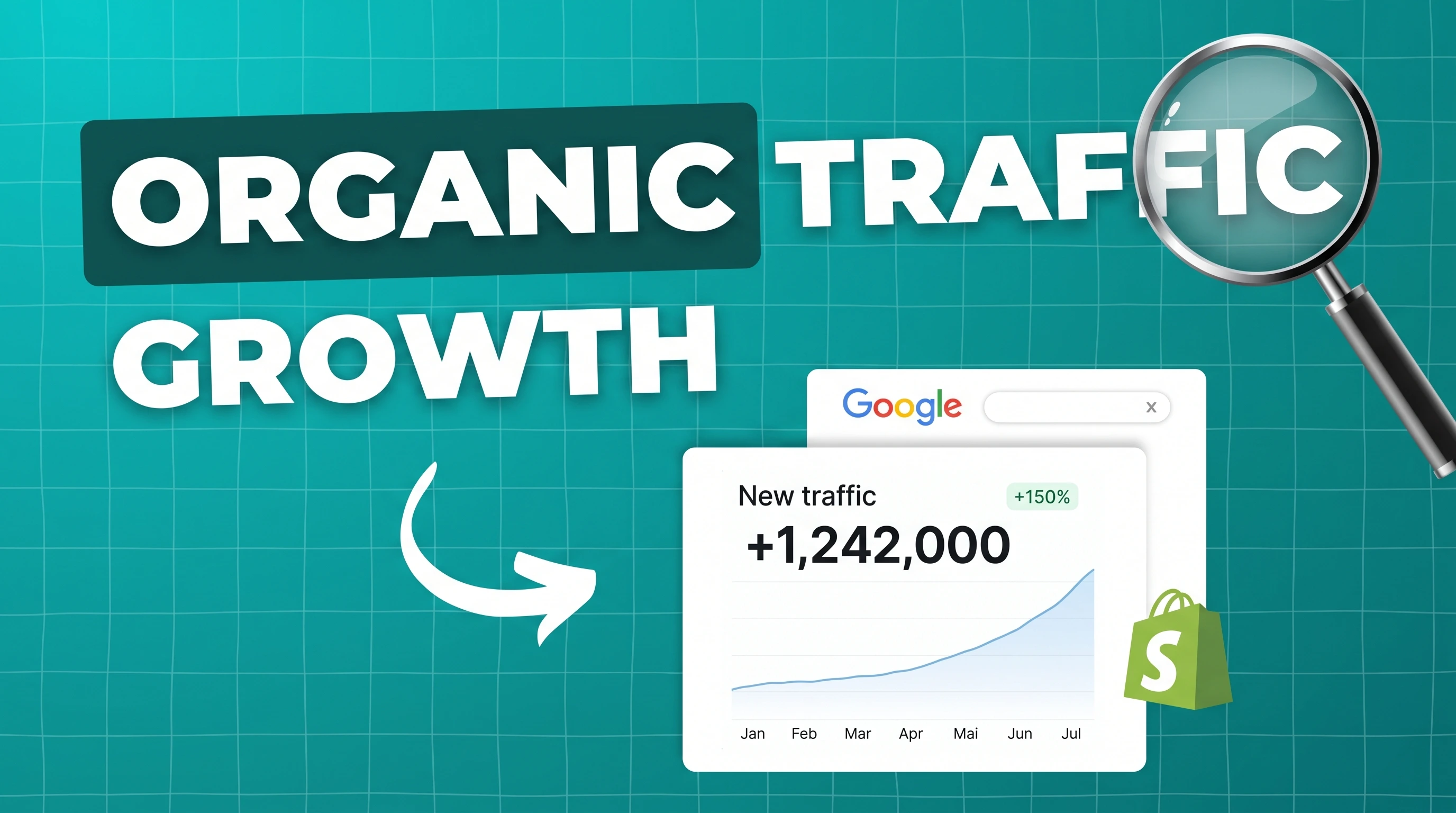
A shopify organic traffic strategy works when you combine a clean technical setup, keywords that match buyer intent, strong collection and product pages, and content that answers real questions. I have spent more than 15 years helping ecommerce brands grow through search, and the pattern is consistent. Stores that win do not chase every keyword. They build a focused system that brings the right visitors and gives them a reason to buy.
This guide explains that system step by step so you can increase Shopify traffic and turn it into revenue.
What Is a Shopify Organic Traffic Strategy?
A shopify organic traffic strategy is a structured plan to earn unpaid visits from search engines like Google. It covers four areas: technical health, keyword targeting, on page optimization, and authority building.
Shopify organic traffic is valuable because it compounds. A well optimized collection page can bring buyers for years without ongoing ad spend. Paid traffic stops when your budget stops. Organic visibility keeps working while you focus on the rest of the business.
Why Your Shopify Store Needs Organic Traffic
Ad costs keep rising, and customer acquisition gets more expensive every year. Organic search gives you a lower cost channel with high intent visitors who are already looking for what you sell.
Search traffic also builds trust. Shoppers often see a store that ranks well as more credible than one they only meet through an ad. When you improve Shopify organic traffic, you reduce dependence on paid channels and make your growth more stable.
Fix Your Technical Foundation First
Content and links will not help if search engines struggle to crawl and understand your store. Start with these checks.
Site speed. Slow themes and heavy apps hurt both rankings and conversions. Compress images, remove unused apps, and choose a lightweight theme.
Mobile experience. Most Shopify shoppers browse on phones. Test your navigation, filters, and checkout on real devices.
Duplicate URLs. Shopify creates multiple paths to the same product, such as collection based URLs. Make sure canonical tags point to the main product URL.
Indexing. Submit your sitemap in Google Search Console and review the coverage report for errors. Remove thin or unnecessary pages from the index, such as filtered variations that add no value.
Structured data. Product schema helps search engines understand price, availability, and reviews. It can make you eligible for rich results, though Google decides whether to show them.
If your theme or setup causes recurring problems, professional Shopify development can solve them at the source instead of patching them one by one.
Build Keyword Research Around Buyer Intent
Not all keywords deserve your time. Group them by intent so every page has a clear job.
Transactional keywords show buying intent, such as “buy organic cotton bedsheets” or “best running shoes for flat feet.” Target these on collection and product pages.
Informational keywords show research intent, such as “how to choose a yoga mat.” Target these with guides and blog posts.
Focus on long tail phrases first. They have lower competition and higher conversion rates. Use Google Search Console to find queries where you already appear on page two or three. These are often the fastest wins.
Map each keyword to one page. Two pages competing for the same term split your ranking power and confuse search engines.
Optimize Collection and Product Pages
For most stores, collection pages drive the largest share of organic revenue. Treat them as your main SEO assets.
Titles and meta descriptions. Write unique titles that include the main keyword and a clear benefit. Keep titles under 60 characters and descriptions under 160.
Collection descriptions. Add a short, useful introduction above the products and a longer helpful section below. Explain who the products are for, how to choose, and what makes your range different.
Product descriptions. Skip manufacturer copy. Write original descriptions that cover materials, sizing, use cases, and care. Duplicate text across stores weakens your ability to rank.
Images. Use descriptive file names and alt text that explains what the image shows. Avoid stuffing keywords into alt text.
Internal links. Link related products, collections, and guides together. This helps shoppers explore and helps Google understand your site structure.
Reviews. Real customer reviews add fresh content, build trust, and support rich results.
Use Content and Blogs to Increase Shopify Traffic
You do not need a blog to rank, but a blog gives you access to searches that product pages cannot capture. People who search “how to” or “best way to” are earlier in the buying journey, and helpful content lets you meet them there.
Good ecommerce content includes buying guides, comparison posts, sizing and care guides, and answers to common pre purchase questions. Write from real experience with your products. Include original photos, specific details, and honest recommendations.
Link every blog post to relevant collections and products so readers can act on what they just learned. Publish consistently, but prioritize quality over volume. Ten excellent articles will outperform fifty thin ones.
Why You Have Shopify Traffic but No Sales
Many store owners reach a point where visits grow but orders do not. If you have Shopify traffic but no sales, the problem is usually one of these.
Wrong audience. You rank for keywords that attract browsers, not buyers. Review which queries bring visits and whether they match what you sell.
Weak product pages. Unclear images, thin descriptions, missing shipping details, or no reviews all reduce confidence.
Friction in checkout. Forced account creation, surprise shipping costs, and limited payment options push buyers away.
Slow or confusing experience. If the page loads slowly or the next step is unclear, visitors leave.
Trust gaps. Missing return policies, contact details, or secure payment signals make shoppers hesitate.
Check your analytics for high traffic pages with high exit rates. Fix those first. Traffic only matters when the page it lands on is built to convert.
How to Improve Shopify Organic Traffic with Links and Authority
Search engines use links as a signal of trust. To improve Shopify organic traffic over time, earn mentions from relevant, credible websites.
Practical ways to do this include digital PR, partnerships with complementary brands, supplier and manufacturer directories, guest contributions on industry sites, and creating resources worth citing, like original data or detailed guides.
Avoid buying links or joining link schemes. They put your store at risk of penalties and rarely deliver lasting results. A smaller number of relevant links beats a large number of weak ones.
When to Bring in Shopify Development Support
Some SEO limits sit inside the theme and code. Slow templates, poor navigation structure, messy URL handling, missing schema, and clumsy filters can cap your growth no matter how good your content is.
A skilled Shopify team can rebuild templates for speed, add structured data correctly, improve site architecture, and create a better path from search result to checkout. If you are planning a redesign or migration, involve SEO from the start so you do not lose existing rankings.
Teams like Bright Mark Digital combine development and search expertise so technical fixes support your traffic and revenue goals together.
Final Thoughts
A sound shopify organic traffic strategy is not about tricks. It is about making your store easy for search engines to understand and easy for shoppers to trust. Fix the technical base, target buyer intent, build useful pages and content, earn credible links, and keep testing what converts.
If you want expert help turning search visibility into sales, explore the Shopify development services at Bright Mark Digital and build a store that is ready to grow.
Written by
Sikandar
SEO Expert and Content Writer
Hi, I'm Sikandar! I’m an SEO Expert and Content Writer passionate about helping businesses grow their online presence through strategic SEO and high-quality content. I specialize in SEO optimization, keyword research, content writing, on-page SEO, and creating engaging, search-engine-friendly content that helps websites reach their target audiences. My goal is to deliver valuable, well-researched, and reader-friendly content while helping businesses improve their search visibility, attract organic traffic, and build a strong online presence.