AI for Marketing: How to Use Generative AI to Grow Your Business in 2026
This guide breaks down exactly how AI is being used in marketing today, which tools are worth your attention, and how real brands are generating results with it. Whether you're a small business owner, a content creator, or running a marketing agency, there's a clear path to getting AI working for you.
What Is AI for Marketing?
AI for marketing refers to using artificial intelligence technologies — including machine learning, natural language processing, and generative AI — to plan, execute, and optimize marketing activities. That covers everything from writing blog posts with tools like ChatGPT to automating email sequences based on user behavior, running predictive ad campaigns, and generating product images at scale.
This isn't a single tool or platform. It's a category of capabilities that plug into the marketing work you're already doing and make it faster, more personalized, or more data-driven.
About 74% of American marketers now use AI regularly, and as of 2025, 78% of companies worldwide have adopted AI in some capacity. The market isn't speculative anymore — it's mainstream. The question is no longer whether to use AI for marketing, but how to use it well.
How to Use AI for Marketing: 7 Key Use Cases
1. Content Creation and Copywriting
This is where most marketers start, and for good reason. Generative AI can produce first drafts of blog posts, product descriptions, ad copy, email subject lines, and social captions in seconds. The output isn't perfect out of the box, but it's a functional starting point that cuts production time significantly.
A typical 1,500-word blog post that previously required 8–10 hours of work now takes under 2 hours from concept to publication with AI assistance. For content teams publishing at volume, that's a real operational shift.
Tools like Jasper, Writesonic, and Copy.ai are purpose-built for marketing content. If you're already using ChatGPT or Claude, those work too — you just need to learn how to prompt them effectively for marketing output.
One thing to get right early: AI should amplify your brand voice, not replace it. Use it to draft, then edit with your own judgment. The teams getting the best results from AI content tools are the ones keeping a human in the loop for strategy, tone, and final review.
2. Generative AI for Marketing Visuals and Video
Generative AI has moved well beyond text. Tools like Midjourney, Adobe Firefly, and Runway now let marketers produce custom imagery, ad creatives, and short video content without a full design team.
H&M demonstrated this at scale in early 2025, creating 30 hyper-realistic digital twins of real models that could pose, move, and adapt across multiple marketing channels and campaigns simultaneously — developed collaboratively with AI specialists and creative teams.
That's an enterprise-level example, but the underlying tools are accessible to smaller operations. An eCommerce brand can now generate on-brand product lifestyle images in minutes rather than scheduling an entire photo shoot.
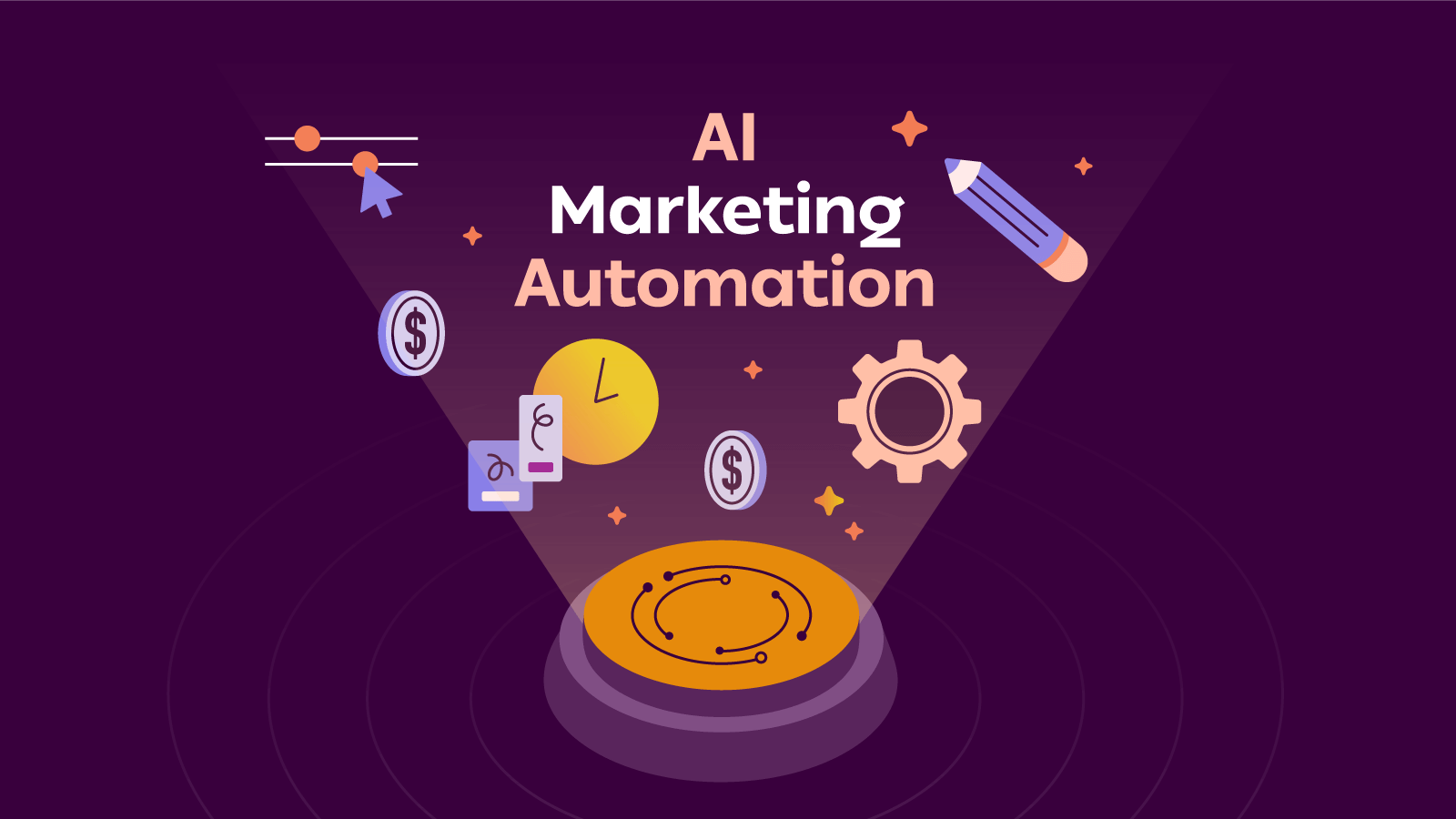
3. AI for Marketing Automation
Marketing automation has been around for years, but AI has made it significantly more capable. Traditional automation runs on fixed rules. AI-driven automation analyzes behavior patterns in real time and adapts what it sends, when it sends it, and to whom.
By 2025, 92% of marketers reported using AI tools as part of their marketing efforts, and at least 81% of marketing organizations now use automation tools in some capacity. Practical applications include:
● Email automation: Personalized sequences that adjust based on open rates, click behavior, and purchase history
● Lead scoring: AI models that rank leads by conversion probability so your sales team focuses on the right people
● Cart abandonment: Automated recovery messages that recover a meaningful share of lost sales
● Customer segmentation: Dynamic audience grouping based on behavioral signals rather than static demographic categories
Platforms like HubSpot, Klaviyo, ActiveCampaign, and Mailchimp have all integrated AI deeply into their automation workflows.
4. AI for SEO and Content Strategy
SEO is one of the highest-leverage places to apply AI for marketing, especially if you're a small business trying to compete in search without a large team.
In 2026, a small business owner with no SEO background can access the same data and optimization capabilities that enterprise teams use, often for under $100/month, through tools like Semrush, Ahrefs, and Surfer SEO.
AI SEO tools help with:
● Keyword research: Finding high-value, low-competition terms faster
● Content briefs: Generating structured outlines based on what's already ranking
● On-page optimization: Analyzing drafts and flagging missing keywords, thin sections, or structural gaps
● Technical audits: Identifying crawl issues, broken links, and page speed problems automatically
SEO isn't a one-and-done task — the best tools analyze your published articles over time and suggest improvements to titles, headings, and meta descriptions to keep them relevant. AI handles the ongoing monitoring and flagging; you handle the judgment calls on what to update.
5. AI-Powered Advertising
If you're running paid ads on Google, Meta, or any major platform, AI is already influencing your results — the platforms themselves use machine learning to optimize bids, placements, and creative rotation. The question is whether you're using AI on your end to match that.
The numbers are compelling. One brand used AI to test 11,340 ad variations and automatically shift spending toward high-performing assets — reducing cost per lead from $10.75 to less than $3.
At a smaller scale, AI tools like Pencil, AdCreative.ai, and Mutiny can help you generate more ad variants, run smarter A/B tests, and make data-driven decisions about which creatives to scale.
6. AI for Social Media Marketing
Managing social media manually — writing posts, scheduling, responding to comments, analyzing performance — is time-consuming. AI makes all of it faster.
Scheduling tools like Buffer and Hootsuite now include AI writing assistants. Sentiment analysis tools can monitor brand mentions across platforms and flag issues before they escalate. Booking.com, for example, uses AI-powered comment moderation to automate sentiment analysis and improve customer engagement at scale.
For smaller brands, the immediate win is using AI to maintain a consistent posting cadence without burning out. Draft a month's worth of captions in a single session, schedule them out, and use the saved time for community engagement and strategy.
7. AI for Personalization and Customer Experience
Personalization at scale used to require a large data team. AI has changed that.
L'Oréal's ModiFace AI virtual try-on technology crossed 100 million sessions in a single year — up 150% year-over-year — and users who engage with it convert at three times the baseline rate. Campaigns featuring AR experiences deliver conversion lifts between 20% and 80%.
At the other end, even basic AI-powered product recommendations measurably improve conversion rates and average order values. Most eCommerce platforms have this capability built in or available as an affordable add-on.
Brands Using AI for Marketing: Real-World Examples
The companies seeing real ROI from AI in marketing aren't treating it as a novelty. They're using it to answer operational questions: which customers are most likely to convert, which creative will perform best, where to allocate budget.
Amazon's Rufus AI shopping assistant drove $12 billion in incremental annualized sales, while Pinterest Lens processes over 600 million visual searches per month.
Unilever has used AI-supported content production to create product imagery and marketing assets faster and more cost-effectively, with content creation becoming faster and performance metrics improving across multiple case examples.
The pattern across these brands is consistent: they picked a specific high-volume marketing problem and applied AI to it systematically, rather than deploying a tool and hoping for improvement.
What Does AI for Marketing Actually Do for ROI?
The ROI data on AI for marketing is strong, but it comes with a caveat worth noting.
According to McKinsey, companies that invest in AI are seeing a revenue uplift of 3–15% and a sales ROI uplift of 10–20%. AI-driven marketing campaigns typically deliver a 15–40% uplift in marketing ROI through better targeting, higher conversions, and cost savings.
At the same time, only about 6% of organizations are seeing meaningful financial returns from their AI investments, according to McKinsey's 2025 State of AI report. The gap between 'we bought an AI tool' and 'AI improved our business performance' is wide — and almost always comes down to strategy, not technology.
The businesses getting results are using AI to answer specific forward-looking questions and automate specific high-volume tasks, not just to produce content faster.
AI for Marketing Operations: Building a Practical Stack
You don't need a dozen tools. A practical AI marketing stack for a small business or lean team looks something like this:
|
Function |
Tool Examples |
|
Content writing |
ChatGPT, Jasper, Claude |
|
SEO & keyword research |
Semrush, Surfer SEO, Ahrefs |
|
Email automation |
Klaviyo, ActiveCampaign, HubSpot |
|
Social media scheduling |
Buffer, Hootsuite |
|
Ad creative generation |
AdCreative.ai, Pencil |
|
Visual content |
Adobe Firefly, Midjourney |
|
Analytics & insights |
Google Analytics 4, Triple Whale |
Start with one function where you're currently spending the most time or money, get comfortable there, then expand. The key is choosing tools that address your specific challenges rather than chasing every new platform — start with one or two high-impact tools, master them, and expand deliberately.
Getting Started With AI for Marketing
AI for marketing isn't a single solution — it's a set of capabilities that can improve almost every area of your marketing when applied with a clear purpose. The best time to start was last year. The second best time is now.
If you want to see how AI-driven strategies can specifically work for your business, BrightMark Digital helps brands build and execute modern digital marketing strategies built around results — not just tools. Visit brightmarkdigital.com to get started.