If you have ever asked yourself how does artificial intelligence work, you are not alone. Business owners, marketers, and startup founders everywhere are trying to understand how AI work actually happens behind the scenes, because this technology is now shaping how customers search, shop, and make buying decisions. Whether you run a small local shop, manage marketing for an ecommerce brand, or lead a growing startup, understanding AI technology is quickly becoming as important as understanding email or social media once was. In this guide, we will break down how AI works for beginners in plain English, explain how AI algorithms work without confusing jargon, and show you exactly how artificial intelligence work in 2026 is already changing the way companies generate leads through Google, social media, and paid ads.
What Is Artificial Intelligence, Really?
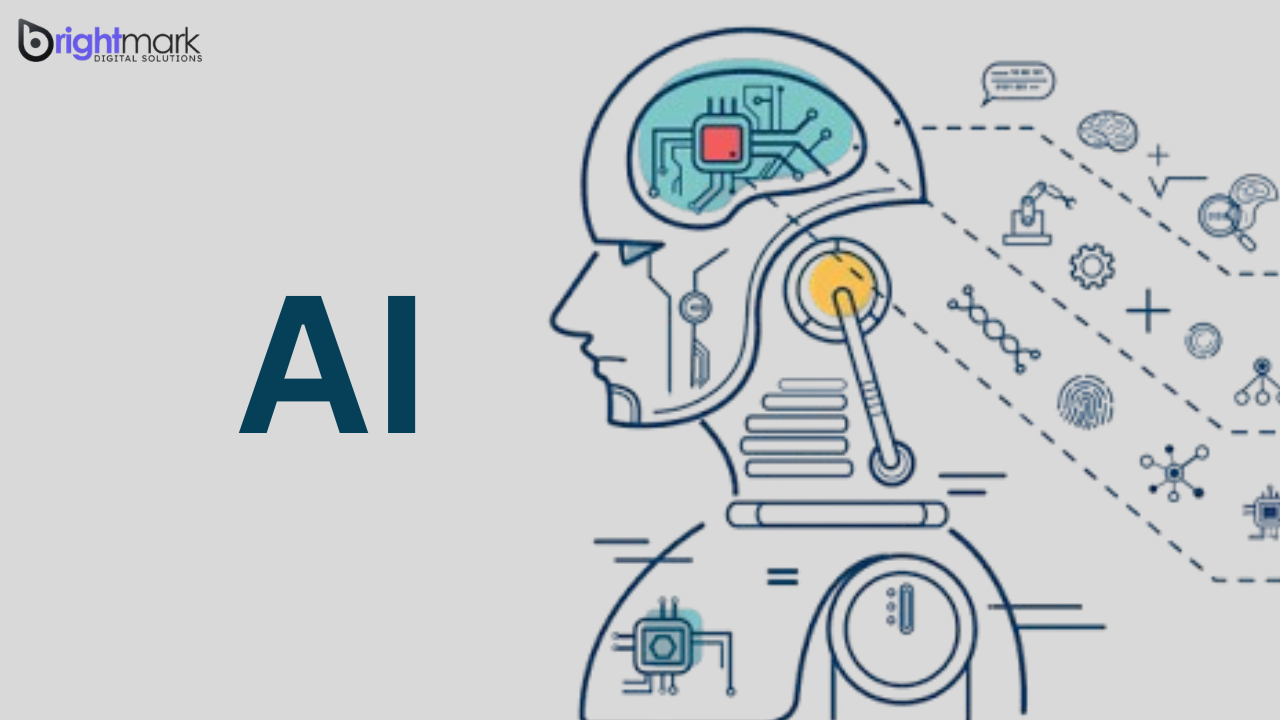
Before we answer how does artificial intelligence work, let us define what we are actually talking about. Artificial intelligence, or AI, is a branch of computer science focused on building machines and software that can perform tasks which normally require human thinking. That includes recognizing patterns, understanding language, making predictions, and even creating new content such as images or text.
AI is not magic, and it is not a robot with a mind of its own. It is a set of mathematical models, trained on large amounts of information, that learn to spot patterns and make decisions based on those patterns. Once you understand that single idea, the rest of how AI works becomes much easier to follow.
For business owners, this matters because AI technology now powers many of the tools you already use every day, including search engines, recommendation systems, chatbots, ad targeting platforms, and email automation tools.
How Does Artificial Intelligence Work? The Basic Process
At a high level, artificial intelligence works through four main stages. Understanding these stages is the fastest way to grasp how AI works for beginners without getting lost in technical detail.
1. Collecting Data
Every AI system needs data to learn from. This could be customer purchase history, website clicks, images, text, voice recordings, or countless other types of information. The more relevant and clean the data, the better the AI system will perform.
For a business, this might mean the data your ecommerce store collects about what customers browse and buy, or the data a marketing manager gathers from ad campaigns and website analytics.
2. Training a Model
Once data is collected, it is fed into an algorithm, which is essentially a set of mathematical instructions. During training, the algorithm looks for patterns in the data. For example, it might learn that customers who buy running shoes often also buy socks, or that certain headlines get more clicks than others.
This training process is repeated thousands or even millions of times, with the model adjusting itself slightly each time to get better at recognizing patterns. This is the heart of how AI algorithms work.
3. Testing and Refining
After training, the model is tested on new data it has not seen before, to check whether it can make accurate predictions or decisions. If it performs poorly, engineers adjust the data, the algorithm, or both, and train it again. This cycle continues until the model reaches an acceptable level of accuracy.
4. Making Predictions or Decisions
Once trained and tested, the AI model is put to work. It takes new information as input and produces an output, such as a recommendation, a translation, a generated image, or a decision about which ad to show a particular customer.
This four step process, collecting data, training, testing, and predicting, is the foundation behind almost every AI tool you interact with, from chatbots to search engines to product recommendation systems.
The Core Building Blocks of AI Technology
To really understand how AI technology functions, it helps to know the main components working together behind the scenes.
Data is the fuel. Without data, there is nothing for an AI system to learn from. Businesses that collect clean, organized data about their customers and operations are in a much stronger position to benefit from AI tools.
Algorithms are the instructions. These are mathematical formulas and statistical methods that tell the system how to process data and learn from it. Different algorithms are suited to different tasks, such as recognizing images, understanding language, or forecasting sales.
Computing power is the engine. Training AI models, especially large ones, requires significant processing power, often provided by specialized computer chips and cloud computing services. This is part of why modern AI has advanced so quickly in recent years, as computing power has become cheaper and more accessible.
Models are the finished product. A model is what you get after an algorithm has been trained on data. It is the actual system that makes predictions, generates content, or automates a task inside a piece of software.
When these four elements work together, you get functioning AI technology that businesses can put to practical use.
How AI Works for Beginners: A Step by Step Breakdown
If you are still new to this topic, it can help to walk through a simple, real world example of how AI works for beginners, using something most business owners are familiar with, spam filtering in email.
First, the email system collects thousands of examples of emails that have already been marked as spam or not spam by users. This is the training data.
Second, an algorithm studies these examples and starts noticing patterns, such as certain words, sender behaviors, or formatting choices that tend to appear more often in spam messages.
Third, the system builds a model based on these patterns and tests it against new emails to see how accurately it can separate spam from legitimate messages.
Fourth, once the model performs well, it goes live and starts filtering your actual inbox, constantly learning and adjusting as new types of spam appear over time.
This same basic pattern, learn from examples, build a model, test it, then apply it, is used across almost every AI application, from product recommendations on an ecommerce site to automated ad bidding on Google and social platforms.
Types of Artificial Intelligence You Should Know
Understanding the different categories of AI will help you make sense of the tools available to your business today.
Narrow AI is designed to perform a specific task, such as recognizing faces in photos, recommending products, or answering customer questions through a chatbot. Almost every AI tool currently used by businesses falls into this category.
General AI refers to a theoretical form of AI that could perform any intellectual task a human can. This does not exist yet in any practical form, despite how it is sometimes portrayed in movies or media.
Machine learning is a subset of AI where systems learn patterns from data rather than being explicitly programmed with fixed rules. Most modern AI tools rely on machine learning.
Deep learning is a more advanced form of machine learning that uses structures called neural networks, loosely inspired by the human brain, to process very large and complex datasets, such as images, video, or natural language.
Generative AI is a newer category that creates original content, including text, images, audio, and video, based on patterns learned from massive amounts of existing content. Tools that write marketing copy, generate product images, or draft social media posts are examples of generative AI in action.
How AI Algorithms Work: Machine Learning Versus Deep Learning
Since many business owners specifically want to know how AI algorithms work, let us go a bit deeper into the two most common approaches.
Machine learning algorithms typically work with structured data, meaning information organized into clear categories, such as spreadsheets of customer purchases or website analytics. Common approaches include decision trees, which make choices by asking a series of yes or no questions, and regression models, which predict numerical outcomes such as expected sales based on past trends.
Deep learning algorithms use layered neural networks to process unstructured data, such as photos, videos, audio, and written language. Each layer in the network extracts increasingly complex patterns from the data. For example, in image recognition, early layers might detect edges and shapes, while later layers recognize entire objects such as faces or products.
The reason deep learning has become so powerful in recent years comes down to three factors, the huge amount of digital data now available, major improvements in computing hardware, and refinements in the algorithms themselves. Together, these factors explain why artificial intelligence work in 2026 looks dramatically more advanced than it did just a few years earlier.
Real World Examples of AI Technology for Businesses
Now that you understand the mechanics, let us look at how AI technology shows up in practical business situations, especially for the kinds of companies most interested in generating leads through Google, social media, and paid advertising.
Search engine optimization and content. AI tools can analyze search intent, suggest content topics, and even help identify which keywords are most likely to bring in qualified traffic, helping local businesses and service providers get found by the right customers. If you want a deeper look at which platforms are worth adopting, see our guide to the best AI SEO tools.
Paid advertising. Platforms like Google Ads and Meta Ads use AI to automatically adjust bids, target the right audiences, and test different ad creative combinations, often outperforming manual campaign management for businesses with limited time or ad management experience. Our Google Ads guide for small and mid sized businesses and our post on finding customers with Meta Ads walk through this in more detail.
Customer service chatbots. Many small and medium sized businesses now use AI chatbots to answer common customer questions instantly, qualify leads before they reach a sales team, and provide support outside of normal business hours, which ties directly into a stronger lead generation strategy.
Ecommerce personalization. Online stores use AI to recommend products based on browsing and purchase history, personalize email offers, and even adjust pricing based on demand patterns. We cover this in depth in AI powered personalization: right message, right time.
Marketing analytics. Marketing managers use AI powered analytics tools to predict which campaigns are likely to perform best, identify at risk customers before they churn, and segment audiences more precisely than manual methods allow. Our post on AI marketing automation breaks down how this works in practice.
Social media management. AI tools can suggest optimal posting times, generate captions, and analyze which types of content generate the most engagement for a specific audience. If your competitors have already started doing this, our article on AI for social media is a good next read.
Each of these examples relies on the exact same underlying process described earlier, collecting data, training a model, testing it, and using it to make predictions or generate content.
How Artificial Intelligence Work in 2026 Is Changing for Businesses
The way artificial intelligence work in 2026 differs quite a bit from just a couple of years earlier, and business owners should be aware of a few key shifts.
AI tools have become far more accessible, with many platforms now offering AI features built directly into everyday software, from email marketing platforms to customer relationship management systems, meaning businesses no longer need a technical team to benefit from AI.
Generative AI has matured significantly, making it practical for small teams to produce marketing content, product descriptions, and customer communications far faster than before, while still requiring human review for accuracy and brand voice.
AI driven search experiences have expanded, with search engines increasingly using AI to summarize answers directly on the results page, which means businesses need to think carefully about how their content is structured so it can be understood and referenced by these systems. For more on what this means for organic traffic, see is SEO dead in 2026.
Personalization has become the expectation rather than a bonus, with customers increasingly expecting tailored recommendations, offers, and communication, all powered by AI systems working quietly in the background.
For companies focused on generating leads through Google, social media, or paid ads, staying aware of these shifts is not optional anymore, it is becoming a basic requirement for staying competitive.
How Small and Medium Sized Businesses Can Use AI to Get More Leads
Understanding how AI works is only useful if you can apply it to your own business. Here are practical starting points.
Start with your existing tools. Many platforms you already use for email marketing, customer relationship management, or advertising already include AI features. Turning these on is often the fastest way to see results without new investment.
Use AI for content creation support. Generative AI tools can help draft blog posts, social captions, and ad copy faster, giving your team more time to focus on strategy and customer relationships, as long as a human still reviews the final output for accuracy and tone. Our guide on using generative AI to grow your business walks through practical ways to start.
Apply AI to ad targeting. If you run paid campaigns on Google or social platforms, allow the built in AI optimization features to test audiences and creative combinations, then monitor performance closely and adjust your budget toward what actually converts. Our Meta and Google Ads service page covers how we set this up for clients.
Add a chatbot to your website. Even a simple AI chatbot can capture leads outside business hours, answer frequently asked questions, and direct serious buyers toward your sales team faster, and pairs well with a site built for conversions, as covered in how a website can generate more leads for your business.
Track your data. AI tools are only as good as the data behind them. Make sure your website, ads, and customer systems are properly tracking the information you will eventually want AI tools to learn from.
Test before you scale. Whether you are testing an AI tool for content, ads, or customer service, start small, measure the results carefully, and expand only once you see clear evidence it is working for your specific audience.
Common Myths About How AI Works
There are several misunderstandings that tend to confuse business owners new to this topic.
Myth: AI can think and understand like a human. In reality, AI systems recognize statistical patterns in data. They do not understand meaning the way people do, even when the output seems remarkably humanlike.
Myth: AI is only for big tech companies. Many affordable AI tools are now built specifically for small and medium sized businesses, covering everything from customer service to marketing.
Myth: AI will replace all human jobs. In most business settings, AI works best as a tool that handles repetitive tasks, freeing up people to focus on strategy, relationships, and creative decisions.
Myth: More AI automatically means better results. The quality of an AI system depends heavily on the data and goals behind it. Poorly implemented AI can waste time and money just as easily as any other poorly planned business tool.
Questions to Ask Before Choosing an AI Tool for Your Business
With so many AI tools now available, it helps to have a simple checklist before committing time or budget to any new platform.
What data does it need, and do I have it? Since every AI tool depends on data to learn from, check whether the platform needs access to your customer records, website analytics, or ad accounts, and confirm you can provide clean, organized data for it to work with effectively.
How is my data protected? Ask any vendor how customer data is stored, whether it is shared with third parties, and how long it is retained. This matters for customer trust and for compliance with privacy regulations that apply to your industry or region.
Does it integrate with tools I already use? An AI tool that connects smoothly with your existing email platform, customer relationship management system, or advertising accounts will save your team significant setup time compared to a standalone system that requires manual data transfers.
Can I measure the results? Before rolling out any AI tool across your whole business, confirm it offers clear reporting so you can measure whether it is actually improving lead generation, conversion rates, or customer satisfaction.
Is there a human in the loop where it matters? For tasks involving customer communication, pricing, or public facing content, make sure there is a review step where a real person checks the output before it goes live. This keeps your brand voice consistent and avoids embarrassing mistakes that fully automated systems can sometimes produce.
What happens if it fails? Have a backup plan for moments when an AI tool produces an incorrect recommendation or an automated response that does not fit the situation, especially for customer facing applications like chatbots or automated ad bidding.
Working through these questions before adoption will help you choose AI technology that genuinely supports your business goals, rather than adding complexity without a clear return.
Why Understanding How AI Works Matters for Your Marketing Strategy
Even if you never build an AI model yourself, having a working knowledge of how artificial intelligence work helps you make better decisions as a business owner or marketing manager. You will be able to evaluate vendor claims more critically, ask better questions during software demos, and set realistic expectations with your team about what a given tool can and cannot do.
This is especially important for companies focused on generating leads through search engines, social media, and paid advertising, since these are exactly the areas where AI adoption is moving fastest. A marketing manager who understands the basics of how AI algorithms work will be far better positioned to interpret performance data, spot when an automated campaign needs manual adjustment, and explain results clearly to leadership or clients. For a broader view of where this is heading, read the future of digital marketing with artificial intelligence.
Related Reading on Brightmark Digital
If you want to keep learning about how AI works and how to put it to use in your own marketing, these related articles are a good next step.
- The Future of Digital Marketing With Artificial Intelligence
- AI for Marketing: How to Use Generative AI to Grow Your Business in 2026
- AI Marketing Automation: The Future of Smarter Digital Marketing
- AI Powered Personalization: Right Message Right Time
- Best AI SEO Tools to Boost Your Online Strategies in 2026
- Your Competitors Are Using AI for Social Media, Are You Ready?
Bringing It All Together
So, how does artificial intelligence work? At its core, it comes down to collecting data, training an algorithm to recognize patterns in that data, testing the resulting model, and then applying it to make predictions, decisions, or generated content. Whether you are looking at how AI algorithms work behind a chatbot, how AI technology powers your ad campaigns, or how artificial intelligence work in 2026 is reshaping search and content, the same basic process applies everywhere.
For small and medium sized business owners, startup founders, ecommerce store owners, marketing managers, and service based or local businesses, the goal is not to become an AI engineer. The goal is to understand enough about how AI works to make smart decisions about which tools to adopt, how to use them responsibly, and how they can help you generate more leads through Google, social media, and paid advertising.